
Art, Music, and Conservation: ISAVIBE’s Project Made Possible Thanks to MBZ

Updated: Sep 8, 2025

Isabella Cortés Lara, artistically known as ISAVIBE or Isabella Endémica, is a Colombian artist, activist, and conservation leader who has succeeded in bringing together art, music, and ecological education to inspire thousands of people, schools, and Indigenous communities around the protection of the country’s most fragile ecosystems. Her creative approach has positioned her as both a cultural and environmental voice, connecting the beauty of biodiversity with the power of collective action.

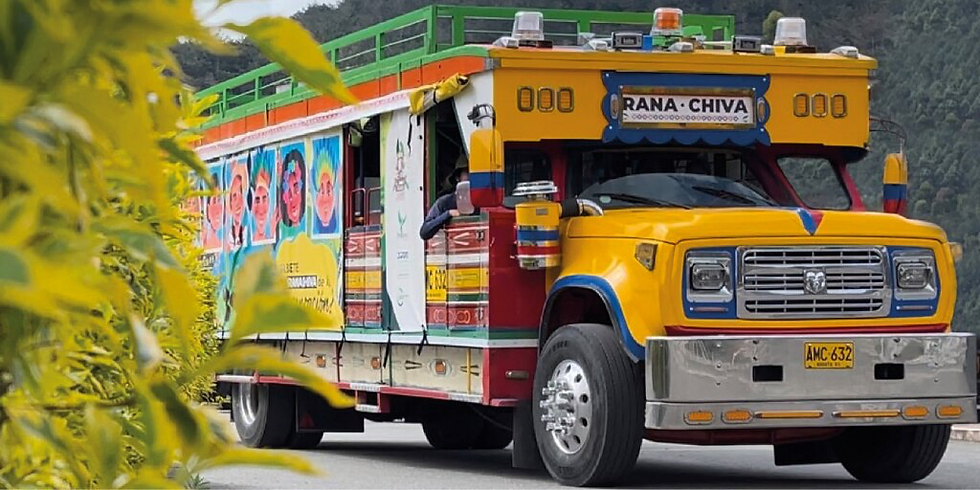
Among her most emblematic initiatives are the Rana Chiva and the Reinita Chiva 2.0, mobile environmental classrooms that she personally designed, paying close attention to every detail inside and out. These rolling classrooms, filled with creativity and love for nature, integrate art, culture, and ecological education for rural communities. Each edition highlights different species: the first was dedicated to the Santander Frog (Hyloscirtus lynchi), while the most recent focuses on migratory birds such as the Cerulean Warbler and the Canada Warbler. Her innovation has crossed borders, gaining international recognition at COP16 in Cali, with the support of the Mohamed bin Zayed Species Conservation Fund (MBZ), an institution committed to biodiversity conservation in Colombia, in alliance with Women for Conservation, where Isabella Cortés serves as Executive Director.

It all began in 2022 with the Chiva de la Conservación, a symbol deeply rooted in Colombian culture. In a country globally recognized for its biodiversity, three threatened species have found crucial support for their protection: the Santander Frog (Hyloscirtus lynchi), the Mountain Grackle (Macroagelaius subalaris), and the Colombian Oak (Quercus humboldtii).

This iconic vehicle began traveling across the country carrying a message of hope and commitment: teaching children and rural communities about the importance of protecting their ecosystems. A dream made possible with the creation of the Rana Chiva through Isabella Cortés’ creativity and the backing of a global strategic ally: MBZ.
Her tireless work combines scientific research, on-the-ground conservation, and collaboration with local communities that play a key role in protecting these unique species of Colombian biodiversity.
Over two years, the Rana Chiva traveled more than 7,000 kilometers, visited 94 educational institutions, and reached over 27,000 people, bringing environmental education to children and youth, particularly in the most remote regions of Colombia.
Music for conservation

Conservation has also found in music a powerful tool to inspire and mobilize. With the release of the song “Agüita de Páramo”, ISAVIBE delivers a message of hope and action around the protection of Colombia’s high Andean páramos, emphasizing their cultural and ecological significance and their role in safeguarding threatened species.
In this work, the artist celebrates Colombia’s natural richness: the frog represents Hyloscirtus lynchi, the bird refers to Macroagelaius subalaris, and the oaks evoke Quercus humboldtii, a native tree species of the country. The composition incorporates the sounds of nature—the singing of birds, frog calls, and the flowing water of the páramo—creating a sensory experience that connects people with the essence of these fragile ecosystems.
The song has become an anthem of awareness, connecting people with nature and reinforcing the call to protect threatened biodiversity.

“Music is a bridge between nature and people. With songs like Agüita de Páramo, I want people not only to recognize the beauty of species such as the Santander Frog, the Mountain Grackle, and the Colombian Oak, but also to feel part of their conservation. Protecting biodiversity also means protecting our own history and future.” Isabella Cortés, Executive Director of WFC and musical artist
Documentary and Community Education
Among her achievements is the production of the documentary “Recorriendo los Caminos de la Conservación: La experiencia de la Rana Chiva” (Journeying Through the Paths of Conservation: The Rana Chiva Experience), an audiovisual project that tells the story of how communities, scientists, and conservationists work together to ensure the survival of these three species. The documentary, the result of months of work and filming across different regions, includes scenes shot in Suratá, Santander, a place renowned for its rich biodiversity and cultural traditions, where the Santander Frog was rediscovered after 36 years
Available on YouTube, the documentary aims not only to showcase the beauty of these species but also to bring society closer to the challenges of conservation and the importance of protecting high mountain ecosystems.
Beyond art and music, Isabella also leads the Guardianes del Agua (Water Guardians) program, which trains women and youth in regions affected by high levels of social conflict. Through creative workshops and environmental education, participants find alternatives to violence, develop skills, and become local actors in the conservation of páramos and watersheds.
Thanks to her work, thousands of people have discovered new ways of relating to nature. She has empowered women and young people who are now local leaders in biodiversity conservation. Her impact has been recognized nationally and internationally, showing that creativity can be as powerful as science in defending biodiversity.
With the support of the Mohamed bin Zayed Species Conservation Fund, there are now greater tools to face the threats endangering these species and to ensure they continue to exist for future generations. Razan Khalifa Al Mubarak, President of the International Union for Conservation of Nature (IUCN), and Nicolas Heard, Acting Director General of the Mohamed bin Zayed Species Conservation Fund, with their voices and support, have enabled ISAVIBE to continue spreading the message of conservation, ensuring that Colombia’s most threatened species, through art and creativity, keep inhabiting the country’s forests.


Comments